Brazoria National Wildlife Refuge
Community spots & sessions in TX · on LutherHeggs
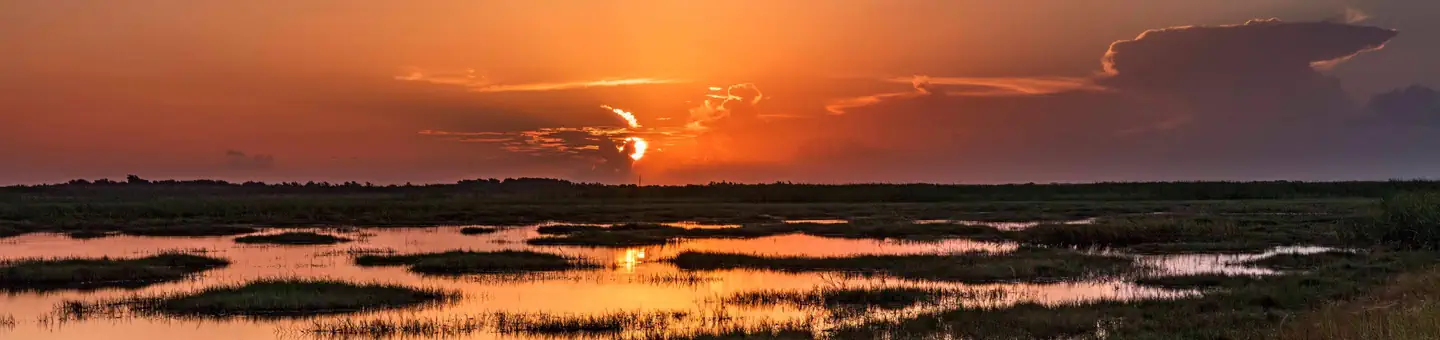
Established in 1966 to provide wintering habitat for migratory waterfowl and other migratory bird species, the refuge provides more than 45,000 acres of salt marsh and freshwater sloughs, impoundments and potholes among native coastal prairie uplands. Bastrop Bayou, Big Slough, Oyster Creek and Chocolate Bayou carry freshwater to the bays creating a mosaic of salt marsh, open water mudflats that are shaped by tidal inundation, changing salinity, sediment movements and desiccating winds. This harsh environment is the breeding grounds for fish and shellfish, which support large populations of shore, wading and waterbirds. Texas Mid-coast National Wildlife Refuge Complex is made up of Brazoria, San Bernard and Big Boggy National Wildlife Refuges. They were designated as Internationally Significant Shorebird Sites by the Western Hemisphere Shorebird Reserve Network. On higher elevations, the saline marsh gives way to saline prairie where seasonal inundation with tidal waters requires salt-tolerant vegetation like gulf cordgrass and sea ox-eye daisy. Coastal prairie dominates the non-saline soils providing habitat for mammals, reptiles as well as resident and migratory birds. Although much of the upland habitat had been utilized for rice farming and grazing prior to being added to the refuge, the natural ridge-swale topography can be found across Brazoria’s prairie. The swales create freshwater wetlands which add diversity and seasonal wetland food sources for waterfowl.